
The Southern Cone
Beyond the
Headlines.
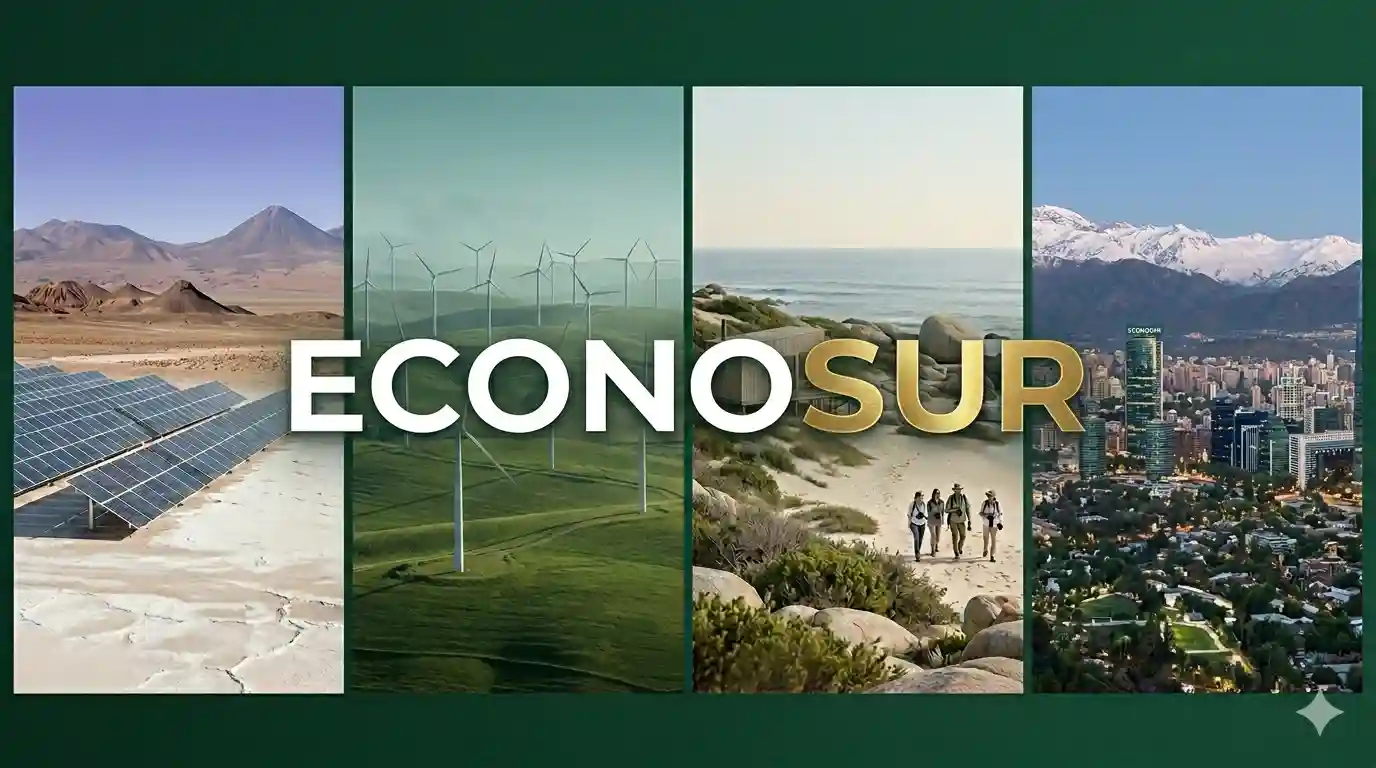
European and international decision-makers need more than country reports and investment pitches to understand this region. Econosur provides the structural context that standard sources leave out — on ecology, economy, and sustainability across Argentina, Brazil, Paraguay, Uruguay, and Chile.
What is
Econosur?
Econosur is an independent initiative covering the ecology, economy, and sustainability of the Southern Cone — Argentina, Brazil, Paraguay, Uruguay, and Chile. We document what shapes the region's long-term trajectory and make it legible for international audiences who need more than headlines.
We report on positive developments that rarely make it into international media, give visibility to the hidden makers — entrepreneurs, projects, and initiatives that build substance without recognition — and connect European and international actors with the regional realities they need to understand before they engage.
Econosur is also a network. The Southern Cone is moving — and the companies, investors, and institutions that become part of Econosur gain presence in a region that rewards those who arrive with context, not just capital.
Five Countries.
One Region. Different Realities.
A country of structural contradictions and underutilized potential. Argentina's Pampas generate a significant share of global soy and beef exports — while debates about land use, water governance, and economic stabilization define its long-term trajectory.
Latin America's largest economy and one of the world's most biodiverse countries. Brazil's energy transition, Amazon governance, and agribusiness expansion are not separate stories — they are the same story told from different angles.
Landlocked but strategically positioned at the heart of the Bioceanic Corridor. Paraguay generates nearly all its electricity from hydropower, exports vast quantities of soy, and faces mounting pressure on its remaining forests and water systems.
Small, stable, and a regional outlier in governance quality. Uruguay has achieved one of the highest shares of renewable energy in the world while maintaining a competitive agribusiness sector — a combination worth understanding on its own terms.
Chile's copper and lithium reserves place it at the center of the global energy transition debate. How the country governs its natural wealth — and what that means for its ecosystems, communities, and trade relationships — is one of the defining questions of the decade.
Companies and Projects in the Southern Cone
Econosur documents companies operating in or entering the Cono Sur, regional development projects, and economic initiatives that have structural significance — without the press release language.
- 01 European and international companies with active presence or expansion plans in the region
- 02 Infrastructure and logistics projects shaping regional connectivity — ports, corridors, energy networks
- 03 Agribusiness, energy, and extractive sectors where the Cono Sur has global market weight
- 04 Local companies and initiatives with regional significance beyond their home market
- 05 Sustainability-linked projects in the context of real regional conditions — not imported frameworks
"The Southern Cone is not a homogeneous market. It is five distinct systems with shared geography and divergent logics — understanding the differences is the starting point, not the conclusion."
We cover sector dynamics, market entry contexts, regulatory realities, and structural shifts — not rankings or investment promotions. Our reference point is always the region as it is, not as it is marketed.
Latest Analysis
The agreement creates new conditions for market access, but the structural barriers facing European companies in the Southern Cone are not primarily tariff-based. A closer look at what changes in practice.
Deforestation data, carbon commitments, and EU due diligence regulation are reshaping how Brazil's agricultural exports are received in European markets. The ecology is no longer separable from the economics.
Uruguay now generates over 95% of its electricity from renewables. This did not happen by accident. The policy decisions, market conditions, and institutional factors behind that shift are more instructive than the headline number.
Become Part of the Econosur Network
The Southern Cone is moving. Trade agreements are reshaping supply chains, energy transitions are redrawing investment maps, and regional actors are looking for international partners who understand the context. Econosur members are part of that conversation — with a profile, a voice, and a presence that arrives before the market does.
This is not a subscription. It is a direct connection to a network that knows the region from the inside.
Your profile listed on Econosur — visible to regional actors, local media, and international decision-makers following the Cono Sur.
Publish under your own name on Econosur. Reach an audience that takes the region seriously — before most of your competitors do.
Receive new analyses before publication. Stay ahead of developments that rarely surface in international media until they are already priced in.
Direct access to Marcus A. Volz and introduction to relevant regional actors when the context is right.
Read the Region.
Join the Network.
Explore Econosur's analysis of the Southern Cone — or become part of the network and gain direct visibility in a region where serious international engagement is still rare.